A recent Forbes article, brought my way by ASCAP newsletter, talks about impending changes to the Internet. Read it here.
After reading it, I have more questions than answers:
- Is the Obama policy for Internet better or worse than what is being proposed now, and why?
- How would new policies affect content creators?
- How would new policies continue or impede the monopoly of major Internet companies?
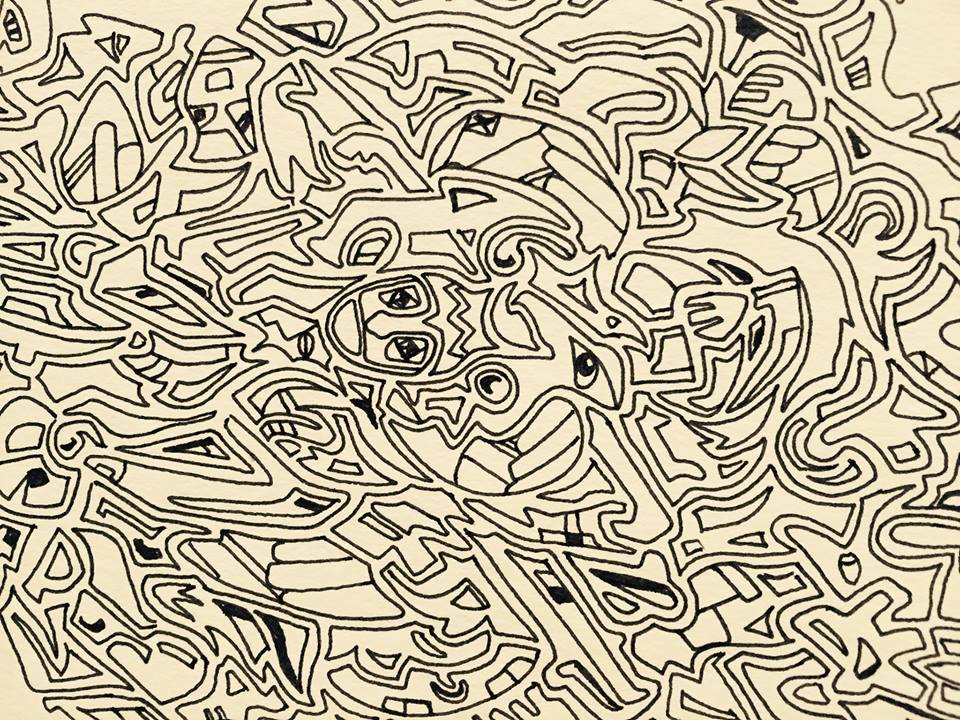
Art by HJ Frank
It is clear that over the past ten years, the content that creative people make is offered for free online in many forms; whether audio, video, photos and writing.
While the Internet offers a place to showcase work, and to view portfolios, it also cuts out the "retail" element that the music industry relied on, in the past, to generate revenue.
The content creators are made to feel like we are lucky to be able to show our work online; meanwhile, Internet and smartphone companies keep the lights on.
While the Internet is often toted as a "great tool" it is also the bane of the entrepreneur who creates content.
This video shows Frank Zappa testifiying before Congress, and serves as a reminder about the importance of musician's and artist's rights.
Here is a run-down on songs, recordings and relted copyrights, licensing and royalties.
Here is a video about owning your own publishing. Even if you are only partially in understanding of this topic, please use this as an excuse to dig deeper, research more and become informed.
Here is one more about the importance of Publishing...food for thought!
Some sites offer the kitchen sink while others are like an intriguing first date. Here are some categories to help your online game. Organize your site by deciding your purpose: sales, familiarity with your brand (soft sell), presentation of data, email capture (ongoing communication) or "internet tourism".
1. Sell, Sell Sell: The homepage features an immediate "call to action" and display of merch. The goal is clear: the site "first impression" is designed for clicking and buying. This isn't necessarily bad: if fans will come to the site to find out how to buy a product, this is a declaration that the website is a trusted POS (point of sale).
2. Pleased to Meet Me: Many website designs are focused on blogging, but that doesn't mean you need to invent yourself as something more interesting than you are. This type of site is a labor-intensive collection of videos, blog entries, essays, poems, artwork, pictures of cats, etc. It's time intensive for the artist (most sites in this style are built directly by the artist) and not focused on sales.
While this type of presentation can be magical in giving a quick feel to the artist's creative process and inner workings of their mind, it also requires serious fans willing to browse it at length.
It creates a personal connection with the artist, yet the conversational tone can be unfiltered (TMI) and familiarity can breed contempt and boredom. For some artists that operate in a niche or are truly working in an advanced multimedia style requiring explanation, the shoe may fit. However, for the most part, get your head out of your ass already.
3. Search & You Will Find: Organized information about artists, projects, releases and/or services. The goal of this site style is to give brand credibility and build a legacy. It tells readers "this information is important." It is extensive, but feels respectful. This type of site is high on easy to find information and low on drivel. It will likely have crisp bios and professional photos. Be careful of being too slick...make sure the deep content is as good as the surface.
4. The Overwhelming First Date: we just met, but can we have your email address to take this further? Sites with a lot of content often want to share it, but can invest more time in learning about the viewer. If your site has a lot of content to share that's great. But consider ways to learn about the readers, or make different areas of the site for window shoppers, customers, public and/or industry partners so that all viewers are not funneled down the same chute.
5. Bits and Pieces: This type of site is a destination, you can almost feel a breath of fresh air as the browser opens. It includes integration with social media, image-based blog entries (look at the pretty colors), and plenty of subtle calls to action. There's no single call to action, and the website style encourages browsing. While this style is great for not hitting viewers over the head, make sure it's "sticky" enough to give them a reason to return, share and buy. If branding is the goal, and only goal, then show the bits.
6. The website for offline...seems counter intuitive, but consider if your website or online presence is actually meant to drive action off line. Examples are readers attending an event, physically walking into a brick and mortar store, or another offline activity. Hard to believe, but there is life beyond the screen. Take this to heart and make sure the online world you create isn't more interesting than real life.
Hope this helps as you build a new website or tweak an existing site for maximum leverage.
As the Internet, especially with the combo of social media and smart phones, makes it possible to capture and share just about any content designers desire...make sure it's what your readers desire also.
Media Bonus:
The magic of the Internet allows us to view this video in regards to #1. Coffee is for closers, but will hard sells cause the reader to close the browser? That is the question.
###
Reach Hannah at axis.contact@gmail.com
or Twitter @HannahFrankSong
First things first. The title here is taken from the phrase "the blind leading the naked". In addition to being the title of The Violent Femme's third album, it is derivative of dialogue in Shakespeare's King Lear, where Gloucester and Old Man are discussing: "...[it is] time's plague when madmen lead the blind".
While we could dive into the historical and current context for the quote, this article is about being a bandleader and how sometimes the musicians in the band are the ones leading.
We could also muse over the wonder of a few lines before it: "...bring some clothes for his naked soul" relating to the musicians helping clothe thee naked song, but let's save the metaphors for lyrics. Gordon Gano, lead singer and songsmith for the Milwaukee-based Violent Femmes (which I fully admit rocking out to in my late teens, what better time?), was likely drawing from this King Lear dialogue when naming his album...but how do I know he named it? Maybe his friend, drummer, bassist or someone else named it. The lead person in a band somehow seems responsible for everything about the band, even down to the album title, but alas it is a group effort. All members of a group, sometimes even of the production staff, record label, friends, support network, anyone related to the project is part of "the clothes" of the otherwise naked project.
Let's look at potential fallacies, alerts and such:
The emperor has no clothes.
Who calls it out when a project has no legs, is going all wrong, or is otherwise off course? Flats with THAT dress?!
The critic.
Bro that shirt is dope.
All is good so long as you keep preaching to the choir in your niche market. These shoes look great but can't walk a block in them.
Your band looks great online but when it comes down to it, the drawing board and the woodshed are a-callin'.
These work boots are not fashionable but myfeet are warm in this Minnesota winter.
You're not drawing the masses, but there's some music being made that has an intrinsic value.
These may be silly examples, but serve to show the bottom line is that HOW this music is dressed and WHAT it is wearing makes the difference of where it can go, who it appeals to, who takes notice, and most importantly, if the music itself is comfortable.
Bandmates and musicians (and engineers) adding creative input to music projects are all part of the way the music is dressed. Their influences, ideas and skills will be the fabric.
This doesn't just apply to music and bands...it could be in a classroom where the questions students ask change the course of the discussion.
You never know what will happen when more people start adding to a project.
In my case, charts and drummers are new chess pieces. I'm enjoying the new directions my music is taking as I adapt to rhythms and have a chance to "learn" my own songs; memorizing one particular version of a song and digging into it.
As much as the role of bandleader often asks us to be proactive, even bullheaded, or have some artistic agenda we're trying to promote.....I feel most creative when I can use the fabric the band brings to the table to sew some new musical clothes.
In the 1970's the challenge in music was to be LOUD. Technology
was just allowing bands to fill stadiums with sound and amps were finally going
up to 10...and the race was on to see who could get to 11 first. Bands like THE
WHO headlined this effort.
Now, the challenge in music seems to be getting bodies to
shows. With technology again in a featured role, the Internet with video,
websites, and social media, as well as smartphones, with apps and access to the
web, people in the tech-oriented affluent first world are accessing more audio
and video media than ever. The Internet allows musicians to share work, from
demos to full albums, in ways that was never before possible. Technology allows
musicians to record music in their home, instead of clamoring to get a major
label record deal, one of the ONLY ways to get professional quality recordings
in most of the 20th century.
Now that technology allows musicians the means to create and
share their music digitally and in the cloud, the challenge that faces us in
the 21st century is physical. Physical bodies in bars, clubs, concert halls,
etc. that come in person to see music. Perhaps recording technology allows
music to get too "heady" and be so introspective that people would
rather listen to it at home on speakers than experience it in person.
The means by which something is created, is the means by which
something is experienced. Music that is CREATED LIVE is more apt to be
successfully performed and enjoyed live. Music that is CREATED IN THE BOX (i.e.
recorded in a studio, edited widely, etc.) is more apt to be successfully
enjoyed IN THE BOX-- i.e. in someone's headphones, or speakers. There's nothing
better or worse with either approach but take note if the way you're creating
music ends up being the way you experience it, and how you expect others to
experience it.
Internship (school accreditation possible) offered to a person interested in: Music Marketing as it relates to... - Photoshop - Web Research - Emailing - Press Contacts - Press Releases - Blogs - Social Media Marketing on Twitter and Facebook - Music Profile sites: Soundcloud, Reverbnation, Bandcamp, Youtube - Booking - Advancing Shows - Developing the web presence of a band or organization - Developing credibility - Developing fans - Developing revenue Skills/Tools Needed: Computer with Internet Access Laptop if possible Willingness to meet in person to review learning and tasks Willingness to serve as Typist/Administrative Assistant ***This is not an on-site position. Work is at-home or at meet-up public location, such as coffeeshop, meeting rooms, etc.*** A work day may consist of: Meeting for 2-4 hours, reviewing tasks and how to use Internet/Computer to complete tasks This is a chance to learn a lot about music marketing. You are the direct assistant to Publicist/Blogger in the Chicago music scene with clients including Podcasts, Recording Studios, Independent Record label, and Audio Engineering/Repair/Tech Businesses. Clients also include independent solo artists and bands. ***About me: Websites: www.onaxismusic.blogspot.com ***How to Apply Only the brave may apply! Be willing to type and you will learn music marketing from an active, participatory perspective and know more about booking and promoting your own band, and working as a Marketing Professional. Email your phone number and a paragraph of intent about yourself and what skills and interests make you want to work. Email: Axis.Contact@Gmail.com ***Duration: Internship is 2-3 months, or longer depending on needs. Schedule is flexible. ***Compensation: Transportation/Stipend may be available. ***Location: Meetings are in Pilsen neighborhood, or in/near downtown.
In Pitbull's song Back in Time, there's this lyric: "Trying to make a billion out of 15 cents". It's a similar attitude to 50 Cent's Get Rich or Die Tryin' album title. There's struggle in those words. It's a bit of machismo in there, but it speaks to reality rather than idealism. At least urban musicians know the odds they're up against. Let's compare that to a random selection of indie rock/alternative rock/folk lyrics. These lyrics also use the word "money": "Our love is all we have...Our love is all of God's money" - Wilco "Mobiles chirping...Take the money and run" - Radiohead "Youth is beauty, money is beauty, hell, beauty is beauty sometimes." - Ani DiFranco When searching for indie-rock or alternative lyrics that use the word "money", we are hard pressed to find an indie rock song about making money. Instead, money is a philosophical concept to play with, or a part of a story in third person. The lyricist in the non-urban realm (folk, alternative, indie) is often talking about money as if it's just another character in a play. The exception is blues-based music. There is I Need a Dollar by Aloe Blacc. Any coincidence that the artist is African American, and more connected to the urban world of rap? Not only is this a tip that America still has work to do before everyone is equal economic footing, it shows that every artist and genre speaks about money differently; some excessively and some not at all. It's referred to in a variety of ways. This brings up the questions: When and how do artists/lyricists talk about money in their songs? - Look at the lyrics of bands you like. How do they discuss money. Look at your own lyrics (if you write lyrics) do you ever write about money? If so, how? When and how do artists/lyricists talk about money with their band, manager, engineer, producer, etc. - How do you discuss payment with your band, subcontractors, clients, etc.? As an artist, are you looking at money as a need, or as a philosophical concept? - If it's a need, make a plan. If it's a philosophical concept, bring it down to earth.
I've spent a little over ten years doing sound for bands in small clubs; the echoes of amplifiers and the distant chorus of 867-5309 have rung in my head. After seeing many bands at a wide variety of experience levels, here's my five cents on what NOT to do at a live show. (This is especially written for newer or younger acts that simply may not know...). Enter this small bar with me where bands have brought out 20-50 of their closest friends. Beer is pouring, people are yelling...and the band takes the stage:
1) Don't cup the mic. If you don't know what cupping is, you may do this. It's when you put your palm over the mic. Sex jokes far aside, (sound engineers are champions at "that's what she said" but that is a post for another time! Please note: the ultimate comeback currently is "isn't that what they called you in high school", according to sources. You're welcome.) it's science: when you put your hand over the mic, you stop it from picking up sound. The sound that does make it into the mic is muffled and because it's not able to capture the whole spectrum of your vocal, it takes in only a portion of frequencies, which creates feedback easily. If the monitors are squealing, and you're grabbing the mic like the rapper you thought you saw do that, please, hold the mic by the handle.
2) Don't point the mic at a monitor. This causes feedback. The science is not that hard. Basically the monitor is pushing out the sound which is going into the mic. Normally, if you talk into the mic, you hear your vocal in the monitor. If you point the mic at the monitor, the microphone picks up what is coming out of the monitor, and then amplifies it, and then picks it up, then amplifies it, times some exponent, and all sonic chaos ensues.
3) Don't call out the venue from the stage, or anywhere around the club's customers. It is unprofessional to throw someone under a bus. If there's technical difficulties, tell the audience, but don't say something like "Yeah, this bar has to figure out their fucking sound system," into the mic. I once had an experience where a band's amps were pushing substantially more wattage than the monitors were capable of. When they wanted more monitor volume, it was like trying to get grandma's voice on a phonograph to compete with amps on par with Pete Townsend at the Allstate arena. Turn down for Pete's sake. Pun intended. They didn't turn down and our modest Mackie board started SMOKING. Yes, I admit something was fucked up. But this is the tech's issue, not the audience's. Audiences like to know everything is OK, so practice the suspension of disbelief, unless there's a fire, then by all means tell the audience. Otherwise, tell a joke until the solution is found. Your soundperson, tech crew and roadies will appreciate your calm head. I also heard from a venue how pissed they were to find out that the band was shit-talking in the bathroom (pun again intended) about the venue, without realizing that customers were around, and it made everyone look like an idiot. Keep your comments to yourself, and tell them to the right person, in private, after the show has gone on. The show must go on, remember? You're in show business. Show some respect to everyone.
In fairness, we must not act as if all sound engineers are saints, battling the dragon of these unprofessional musicians that just don't know any better. The pendulum swings both ways. In fairness, if you ever see a sound engineer with these qualities, you may want to RUN not walk away:
1) Smiley Face EQ
2) Bare feet
Thank you, until next time.
(Original date of this article is February 9, 2014). Republished from the archives.
Is budget holding you back from achieving your musical dreams? Here's some advice from OnAxis Music, the local publicity company serving indie musicians, so you can push forward with solutions:
1. TWO BIRDS, ONE STONE Partner, partner, partner. Work with others in mutually beneficial ways. For example, take the challenge of printing fliers on no budget. For performing musicians, advertising your upcoming shows with fliers is affordable if you partner with a business or venue that advertises with you. ---- making fliers with a printing company who can advertise their services on the back of the flier ---- splitting the cost of the fliers with the venue. Include their logo on the flier, along with all the shows that month. That way, both the band and the venue benefit from the advertising. ---- Ask local businesses if they'd like to include a coupon on the flier. Ask if the business will hand out fliers to its customers. Plus, there's an added bonus for people that pick up the flier. Take this principle and apply it to any challenge.
2. BUILDING FANBASE When you're getting started, most of your fans, besides family and friends will probably be other musicians. Build your fanbase in the music community: - host a weekly or monthly open mic. Most venues will pay you to provide sound and organize the event. - develop a monthly showcase, or a special showcase. Whether you produce hip hop, folk, jazz, world or metal music, find a venue that will open its doors to a showcase. Search for bands or artists in your genre and put together a show with three or four acts. Work together with the acts to promote 2-3 months in advance. - Consider adding a charity to the mix. Many charities have events that need music entertainment. You'll present your music to a new fanbase, and get good karma!
3. WEB RESEARCH It takes time, but it pays off in spades. Search for new venues, new skills and opportunities to learn and network. Remember to make sure you take frequent breaks and stretch your hands. Make sure your set-up is ergonomic. If you do web research on a smartphone or laptop, keep it simple. If you do extended research, use a desktop or a comfortable position when using the computer. It will save your hands, wrists and fingers.
4. KEEP GOOD RECORDS If you can measure it, you can understand it and make it grow. Try Excel, Open Office, Microsoft Word, your smartphone, or simply a paper and pen-- write down how much you spend, in time and money, on your music goals each day. Each week, look at your progress. This could be as simple as tracking your Twitter followers and adds, or keeping track of how much gas you spent getting to practice. It all adds up. Keeping track of your practice time and progress will help you learn self discipline and focus. Distraction is the biggest reason people don't reach goals. Do yourself a favor and get organized!
5. MAKE THE PLUNGE Music requires your 100% commitment. For excellence, you need the right space, comfort and inspiration. Make your music a priority, and it will treat you well. Good luck! Parts of this article also appears in the Paragon Studios Inc. recent newsletter. Sign up and learn more at www.paragonstudiosinc.com
1. Know what you want. If you know what you truly want, you are simply working with the universe at that point. Ask for what you want. Be specific. Ask yourself, and really know what it is you want. 2. Write about it and think about it like it has already happened. Take out a pen and paper and write an entry to yourself with your ideal state in mind. Then write how good you feel about it. Instead of writing "I want to make a $1,000.00 on my next gig" or "I want to make a successful record" or "I want to write the best lyric I've heard all year" or "I want to understand EQing on overhead mics" or "I want to be able to sightread any music"...write it out like this: I just made $1000.00 on my last gig. I feel great about it. I just completed a successful record, I feel great about it. I just wrote the best lyric I've heard all year. I am excited about it. I now understand EQing of overhead mics. I can sightread any piece of music. Write it, and feel it. Say it. Have fun. But be careful what you wish for, it can actually work! You might add HOW you achieved the goal also, and what you've learned. What were the steps you took to achieve your goal? 3. Breathe. Yep, breathe. 4. Take a break We are often "on call" 24/7. Just forget about it and go to a museum, small town, nature area, art gallery, cafe, book, or a long walk. The key is to go somewhere unexpected, where your day-to-day hassle is far away. Sometimes this involves turning off the smart phone or computer for awhile. Worrying about work? Don't even think about it. Give yourself a break, really. 5. Know what you have control over and what you do not. When you do your best, there is no stress. 6. If it feels good, it is good. Your life and health are highly important- listen to your bod. If you're trying to book your band at a big venue, and you're not sure it's a stretch- it probably is. That isn't to say don't try big leaps, just know when you're jumping. I hope these tips help you out when you need to recharge for your music mission.